Formulation

A collection of 87 posts
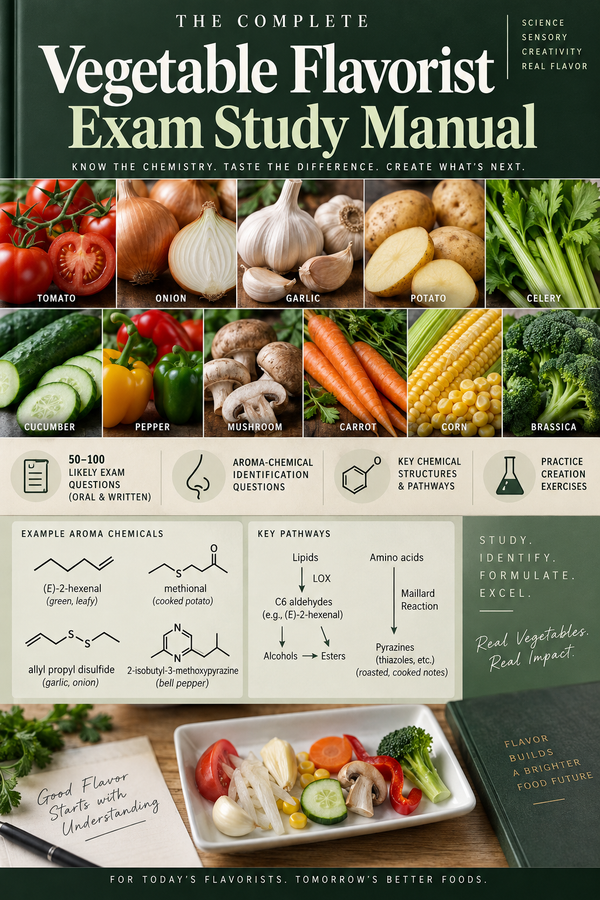
Vegetable Flavor Creation — Certified Flavorist Study Guide
Members only
Training

Vegetable Flavor Creation — Certified Flavorist Study Guide

The Society of Flavor Chemists’ current syllabus explicitly lists Vegetable under Flavor Creation and says Certified candidates should demonstrate broad/deep knowledge consistent with successful independent and original flavor creation. The syllabus also expects candidates to connect creation to raw materials, chemistry, analytical methods, production, application, stability, regulations, and economics—
47 min read
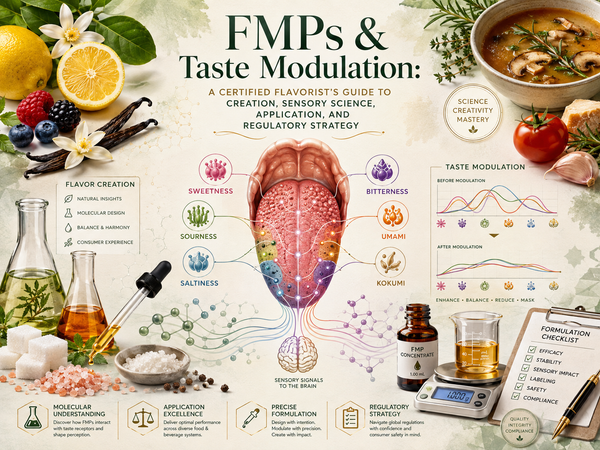
FMPs & Taste Modulation: A Certified Flavorist’s Guide to Creation, Sensory Science, Application, and Regulatory Strategy
Training

FMPs & Taste Modulation: A Certified Flavorist’s Guide to Creation, Sensory Science, Application, and Regulatory Strategy

FMPs / Taste Modulation is explicitly listed in the Society of Flavor Chemists syllabus under Flavor Creation, and Certified candidates are expected to demonstrate broad, deep knowledge together with successful independent/original flavor-creation ability—not merely recognize definitions. (Flavor Chemists) What follows is the knowledge framework I would expect a
22 min read
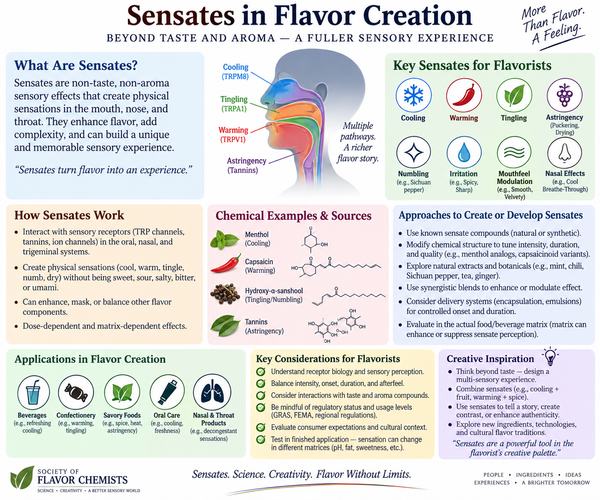
Sensates in Flavor Creation: A Certified Flavorist’s Guide to Chemesthesis, Formulation, Sensory Design, and Application
Training

Sensates in Flavor Creation: A Certified Flavorist’s Guide to Chemesthesis, Formulation, Sensory Design, and Application

The Society of Flavor Chemists explicitly lists “Sensates” as one of the flavor types candidates should be prepared to explain creating and developing. For Certified membership, the SFC expects broad and deep working knowledge demonstrating successful independent and original flavor creation, including raw materials, laboratory practice, production, regulatory considerations, and
27 min read
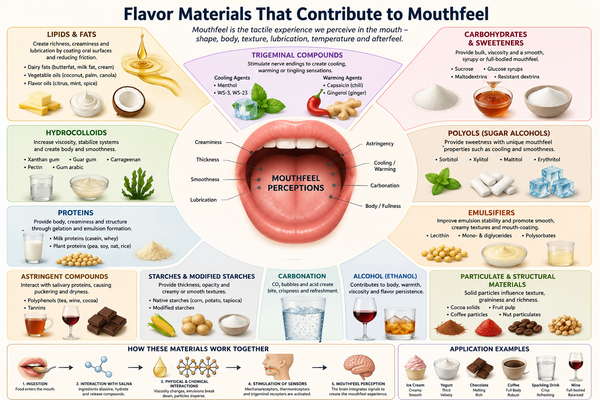
Flavor Materials That Contribute to Mouthfeel: What the Society of Flavor Chemists Wants you to Know
Members only
Formulation

Flavor Materials That Contribute to Mouthfeel: What the Society of Flavor Chemists Wants you to Know

Mouthfeel is one of several dozen flavor attributes that the Society of Flavor Chemists expects certified flavorists to understand and effectively manipulate during flavor formulation. Candidates may also encounter questions related to flavor materials that influence mouthfeel during the qualification examination or interview. Introduction Mouthfeel is one of the most
10 min read
Technical Guide: Building MSG-Free Umami Flavor Enhancer Systems
Members only
Formulation

Technical Guide: Building MSG-Free Umami Flavor Enhancer Systems

For a flavorist, an umami flavor enhancer is not a single ingredient. It is a system that increases: * Savory depth * Mouthfulness * Brothy character * Lingering flavor * Protein perception * Salt enhancement * Fat enhancement * Flavor continuity Without MSG, the challenge becomes creating umami through natural glutamate sources, nucleotides, kokumi materials, sulfur chemistry, fermentation
3 min read
Hexyl Hexanoate (CAS 6378-65-0/FEMA:2572) – Comprehensive Flavor Applications
Ingredients

Hexyl Hexanoate (CAS 6378-65-0/FEMA:2572) – Comprehensive Flavor Applications

Sensory Profile Sweet fruity, green apple, pear, banana-like, pineapple-like, tropical fruit, juicy fruit flesh, fruit skin, mildly waxy, wine-like fruity. Technical Characteristics PropertyDescriptionOdor StrengthMedium–strongVolatilityModerateStabilityGoodFlavor FunctionFruity body builderNote PositionUpper heart noteNatural OccurrenceApple, pear, pineapple, guava, passionfruit, strawberry, wine Primary Functions Adds juiciness, fruit flesh, fruit skin realism,
8 min read