Flavorings

A collection of 111 posts
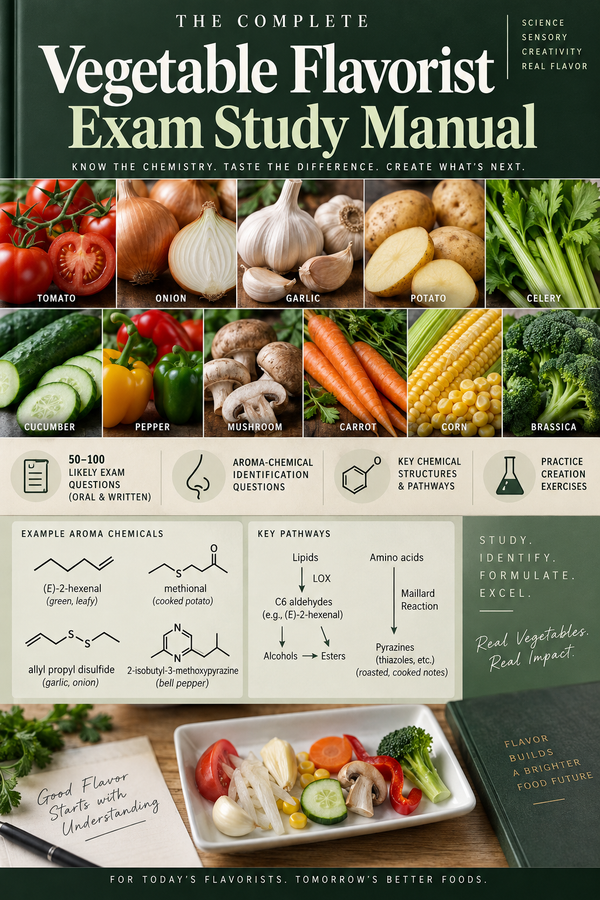
Vegetable Flavor Creation — Certified Flavorist Study Guide
Members only
Training

Vegetable Flavor Creation — Certified Flavorist Study Guide

The Society of Flavor Chemists’ current syllabus explicitly lists Vegetable under Flavor Creation and says Certified candidates should demonstrate broad/deep knowledge consistent with successful independent and original flavor creation. The syllabus also expects candidates to connect creation to raw materials, chemistry, analytical methods, production, application, stability, regulations, and economics—
47 min read
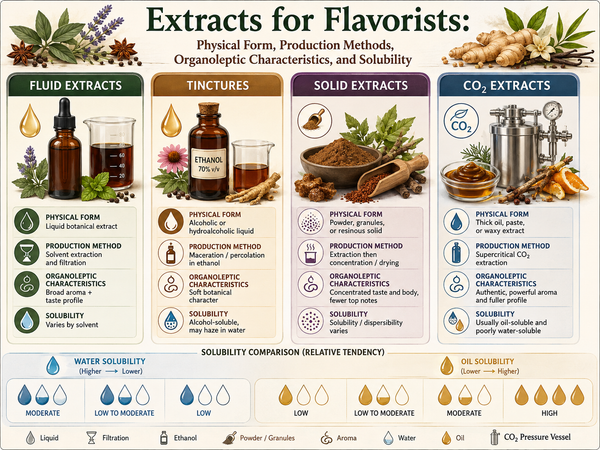
Extracts for Flavorists: Physical Form, Production Methods, Organoleptic Characteristics, and Solubility
Training

Extracts for Flavorists: Physical Form, Production Methods, Organoleptic Characteristics, and Solubility

The January 2026 Society of Flavor Chemists syllabus specifically expects candidates to be able to explain the physical form, method of production, organoleptic characteristics, and solubility of “Extracts: Fluid & Solid Extracts, Tinctures, CO₂.” (Flavor Chemists) A useful flavorist-level treatment is below. One important qualification: “fluid extract,” “solid extract,
7 min read
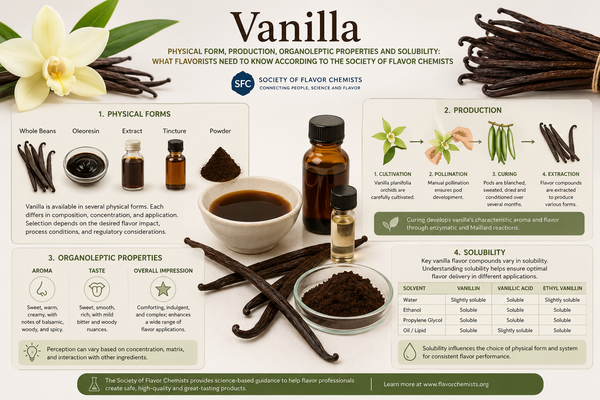
Vanilla: Physical Form, Production, Organoleptic Properties, and Solubility: What Flavorists Need to Know, according to the Society of Flavor Chemists
Training

Vanilla: Physical Form, Production, Organoleptic Properties, and Solubility: What Flavorists Need to Know, according to the Society of Flavor Chemists

Vanilla is a cornerstone flavoring substance in the food and beverage industry. The Society of Flavor Chemists mandates that all certified flavorists possess a thorough understanding of this ingredient and its diverse applications. The following overview covers only the fundamentals; comprehensive training requires far more in-depth study. For those
7 min read
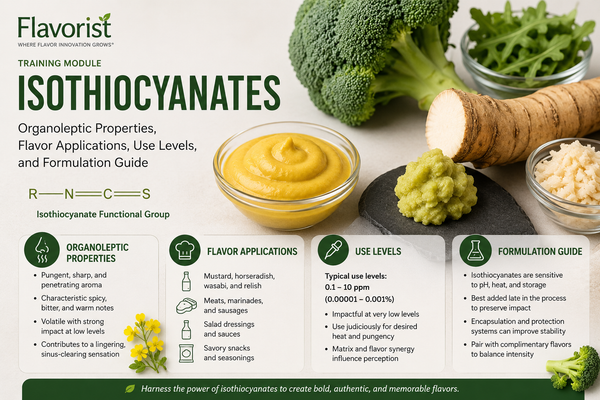
Flavorist Training Module: Isothiocyanates — Structure, Chemistry, Reactivity, Stability, and Flavor Applications
Flavorings Featured

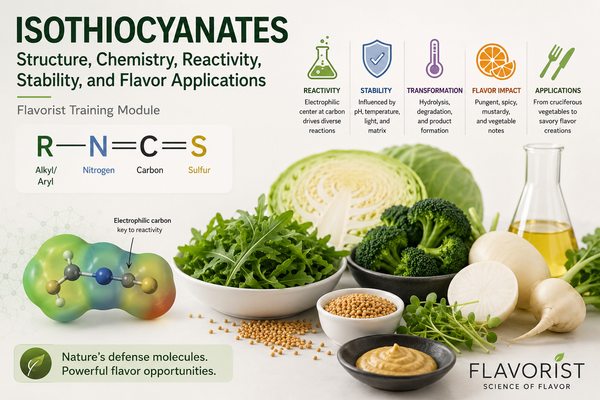
Flavorist Training Module: Isothiocyanates — Structure, Chemistry, Reactivity, Stability, and Flavor Applications

At the bottom of this page, you will find a "Buy Now" button to purchase the digital files on 25 Commercial Applications of Isothiocyanates in Flavors (10 chapters, approximately 50 pages). Also read another article: Flavorist Training Module: Isothiocyanates — Organoleptic Properties, Flavor Applications, Use Levels, and Formulation GuideAlso
9 min read
Flavorist Training Module: Isothiocyanates — Organoleptic Properties, Flavor Applications, Use Levels, and Formulation Guide
Flavorings Featured

Flavorist Training Module: Isothiocyanates — Organoleptic Properties, Flavor Applications, Use Levels, and Formulation Guide

Also read another post below Flavorist Training Module: Isothiocyanates — Structure, Chemistry, Reactivity, Stability, and Flavor ApplicationsAt the bottom of this page, you will find a “Buy Now” button to purchase the digital files on 25 Commercial Applications of Isothiocyanates in Flavors (10 chapters, approximately 50 pages). Introduction Isothiocyanates are one
33 min read
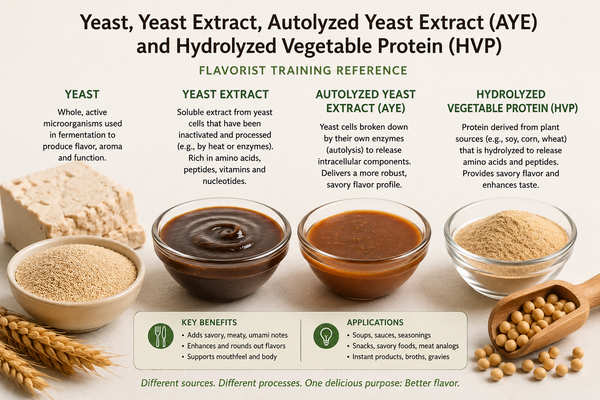
Yeast, Yeast Extract, Autolyzed Yeast Extract (AYE), and Hydrolyzed Vegetable Protein (HVP) - Flavorist Training Reference
Training

Yeast, Yeast Extract, Autolyzed Yeast Extract (AYE), and Hydrolyzed Vegetable Protein (HVP) - Flavorist Training Reference

Yeast, Yeast extract, autolyzed yeast extract (AYE), and hydrolyzed vegetable protein (HVP) are one of several categories of flavoring substances that the Society of Flavor Chemists requires certified flavorists to understand thoroughly—particularly in terms of physical forms, production/manufacturing methods, organoleptic properties, and solubility. This topic is explicitly included
10 min read
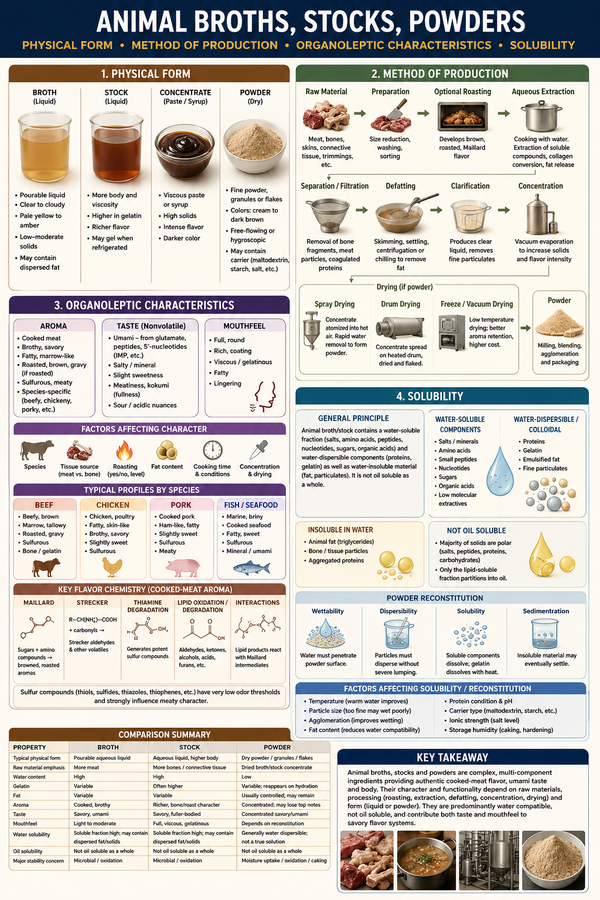
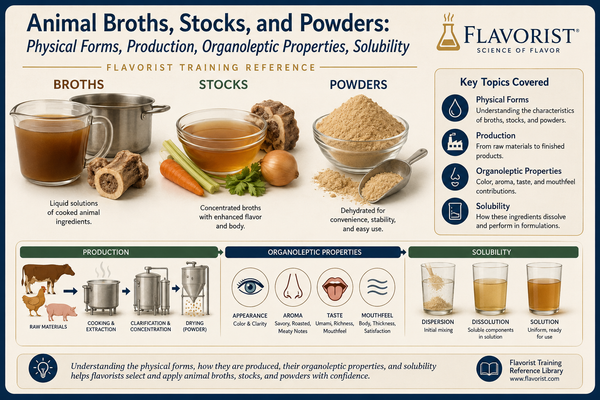
Animal Broths, Stocks, and Powders: Physical Forms, Production, Organoleptic properties, Solubility - Flavorist Training Reference
Flavorings

Animal Broths, Stocks, and Powders: Physical Forms, Production, Organoleptic properties, Solubility - Flavorist Training Reference

Animal broths, stocks, and powders are one of several categories of flavoring substances that the Society of Flavor Chemists requires certified flavorists to understand thoroughly—particularly in terms of physical forms, production/manufacturing methods, organoleptic properties, and solubility. This topic is explicitly included on the Society’s qualification examination syllabus.
15 min read
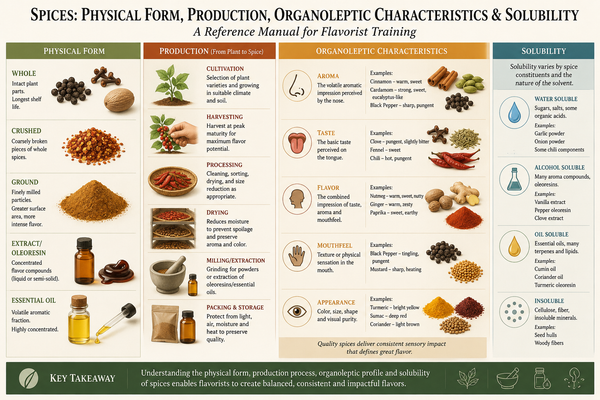
Spices: Physical Form, Production, Organoleptic Characteristics & Solubility - A Reference Manual for Flavorist Training
Flavorings

Spices: Physical Form, Production, Organoleptic Characteristics & Solubility - A Reference Manual for Flavorist Training

Spices are one of several categories of natural flavoring substances that the Society of Flavor Chemists requires certified flavorists to understand thoroughly—particularly in terms of physical forms, production/manufacturing methods, organoleptic properties, and solubility. This topic is explicitly included on the Society’s qualification examination syllabus. What follows is
12 min read
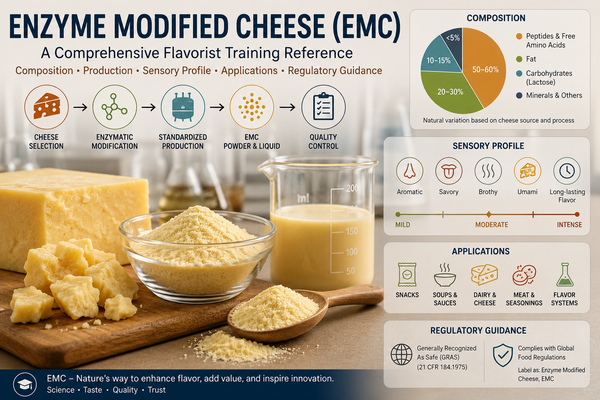
Enzyme Modified Cheese (EMC): A Comprehensive Flavorist Training Reference Composition, Production, Sensory Profile, Applications, and Regulatory Guidance
Members only
Flavorings

Enzyme Modified Cheese (EMC): A Comprehensive Flavorist Training Reference Composition, Production, Sensory Profile, Applications, and Regulatory Guidance

Table of Contents Part 1 — Fundamentals: Physical Form, Production, Sensory Profile & Solubility 1. Introduction 2. Physical Form 3. Method of Production * 3.1 Substrate Preparation * 3.2 Pasteurization * 3.3 Cooling to Reaction Temperature * 3.4 Enzyme Addition * 3.5 Controlled Incubation (Ripening) * 3.6 Enzyme Inactivation * 3.7
13 min read
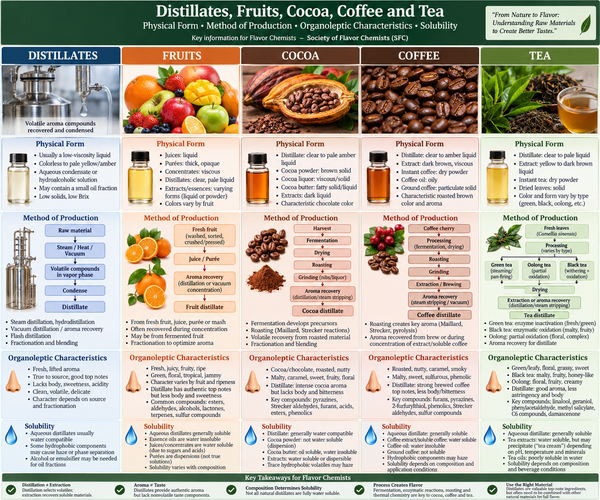
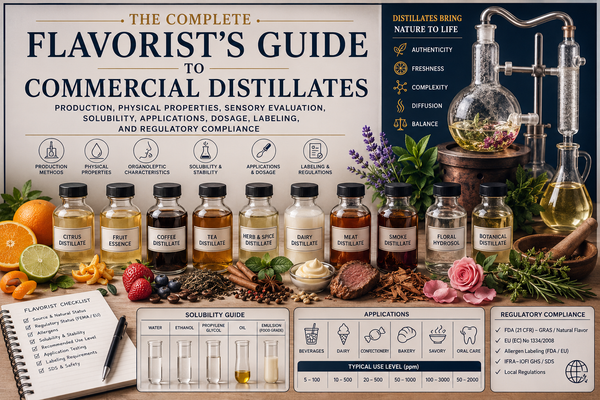
The Complete Flavorist's Guide to Commercial Distillates: Production, Physical Properties, Sensory Evaluation, Solubility, Applications, Dosage, Labeling, and Regulatory Compliance
Training

The Complete Flavorist's Guide to Commercial Distillates: Production, Physical Properties, Sensory Evaluation, Solubility, Applications, Dosage, Labeling, and Regulatory Compliance

Below is a practical flavorist training guide to commercial “distillates”. It covers the commercial families flavorists actually encounter, how to use them, and what to check before formula release. 1. What “distillate” means in flavor work A distillate is a volatile flavor fraction obtained by vaporizing aroma compounds from a
8 min read